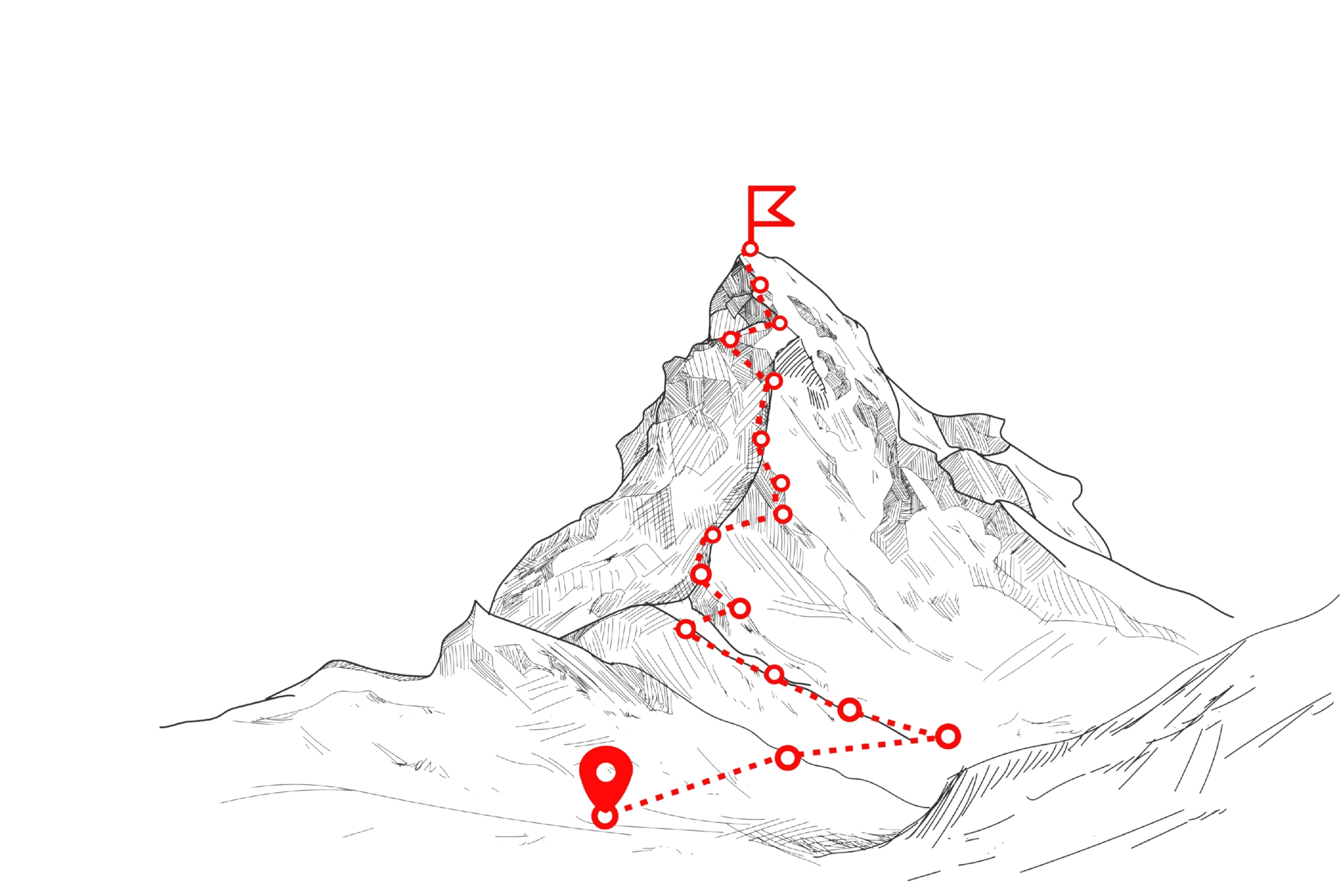
SEO
What Does "Ranking on Google" Actually Mean?
Everyone says they want to rank on Google but most people don't know what that actually means. Here's a plain-English breakdown of how rankings work and what it realistically takes to get there.
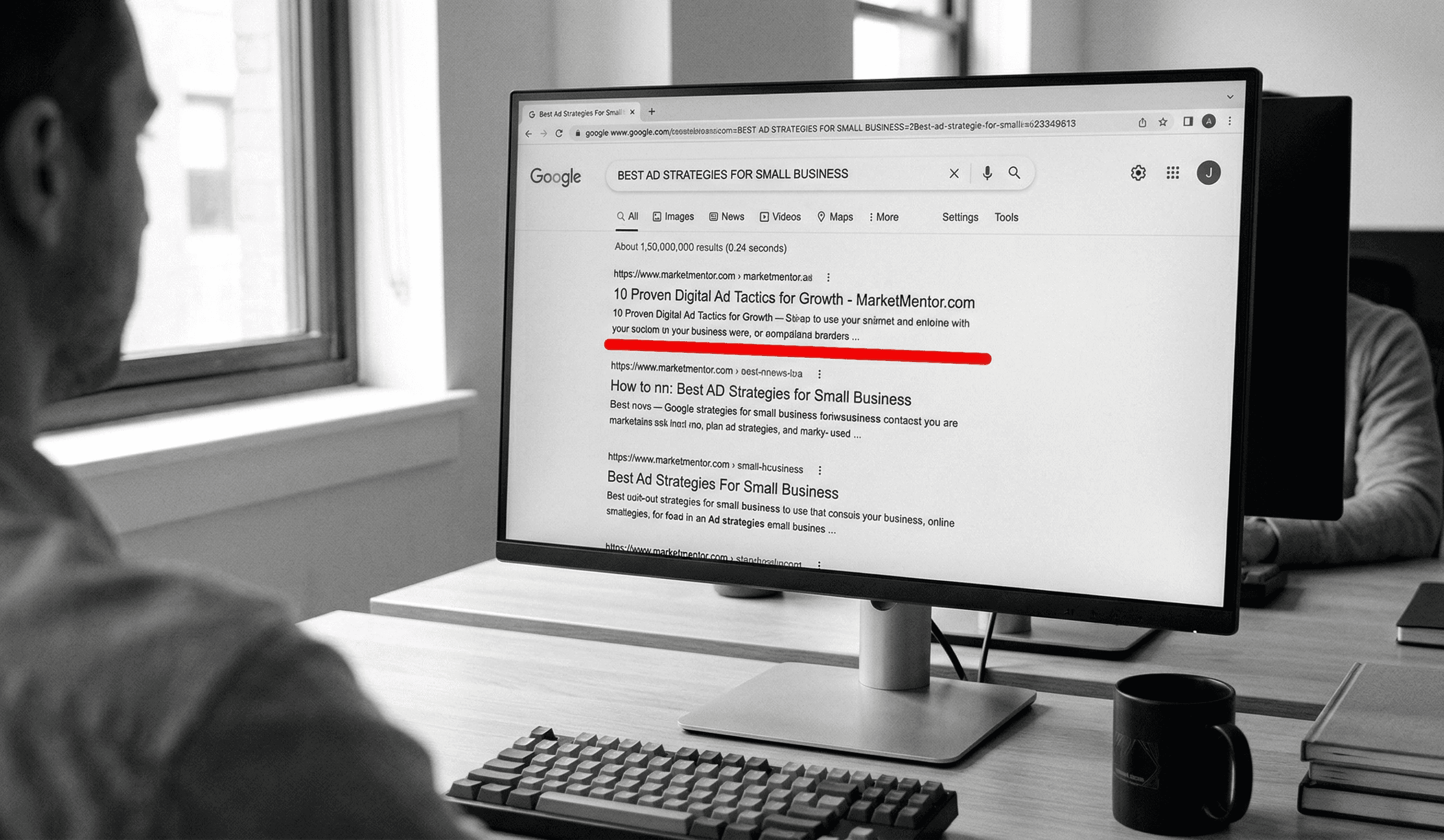
Marketing is full of complicated words designed to make simple concepts feel like rocket science. In this series, AdVantage breaks down common marketing terms by showing you the jargon-heavy version used to confuse you, followed by the simple advice you actually need to know to grow your business.
"We need to rank on Google."
We hear this from almost every business we talk to. And it makes sense, everyone knows that showing up on Google is important. But most people don't have a clear picture of what ranking actually means, how it works, or what it realistically takes.
Here's a plain-English breakdown.
1. The Overcomplicated Version
Ask an SEO agency to explain Google rankings and they'll say something like:
"Ranking is the byproduct of a multi-signal algorithmic evaluation that weighs over 200 factors including domain authority, topical relevance, E-E-A-T signals, Core Web Vitals, backlink equity, semantic keyword density, and user engagement metrics to determine your position within the SERP for any given query at a specific geographic and device context."
The Real Translation: "Google decides which websites to show first based on how relevant, trustworthy, and useful they are. Your job is to make your site as relevant, trustworthy, and useful as possible for the things your customers are searching for."
2. The Simple Version
Every time someone types something into Google, Google scans billions of web pages and tries to return the most helpful, trustworthy results for that specific search.
"Ranking" just means where your website appears in those results. Position 1 is the top result. Position 10 is the bottom of the first page. Position 11 is the top of page two, which most people never see.
Here's the important part: you don't rank for "Google." You rank for specific search terms called keywords. A roofing company in Logan might rank number one for "roof repair Logan Utah" and not appear at all for "best roofing company Utah." Every keyword is its own competition.
There are also different types of results to understand:
Local pack: The map results that show three local businesses with ratings and a phone number. These come from Google Business Profile.
Organic results: The blue links below the map. These come from your website's SEO.
Paid results: The results marked "Sponsored" at the top. These are paid ads and have nothing to do with SEO.
Most businesses want to show up in both the local pack and the organic results. They require different strategies but reinforce each other.
3. Why It Matters
The higher you rank for the right keywords, the more people find you without you having to pay for every click.
Studies consistently show that the first result on Google gets roughly a third of all clicks for that search. By position five, you're getting a fraction of that. By page two, almost nobody sees you.
The goal of SEO is to get your business into those top positions for the keywords your customers are actually searching. Not just any keywords, the ones with real buying intent behind them.
"Countertops Logan Utah" is a buying-intent keyword. Someone searching that is probably ready to get a quote. "What is quartz" is an informational keyword. Someone searching that is curious but probably not ready to buy yet. A good SEO strategy targets both, but prioritizes the ones closest to a purchase decision.
The other thing most people don't realize is that SEO takes time. A new website can take three to six months to start ranking meaningfully. But once you rank, that traffic keeps coming without ongoing ad spend. That's the long game, and it's worth playing.
4. How to Use It (This Week)
Here's how to get a realistic picture of where you stand:
Search for yourself the way a customer would. Type the most obvious search term for your business into Google, something like "[your service] [your city]." Where do you show up? Are you in the map pack? On page one? Not at all? That's your baseline.
Look at who is ranking above you. Look at the businesses ranking above you. What do their websites look like? How many Google reviews do they have? How long have they been around? That tells you what you're up against.
Check your Google Business Profile. If you don't have a Google Business Profile set up and optimized, that's your first move. It's the fastest path to showing up in local search results.
Want to know exactly where you rank and what it would take to move up? We run free SEO audits for local businesses. Shoot us a message and we'll show you where you stand.